Source-verifiedEditor reviewedCorrections welcome
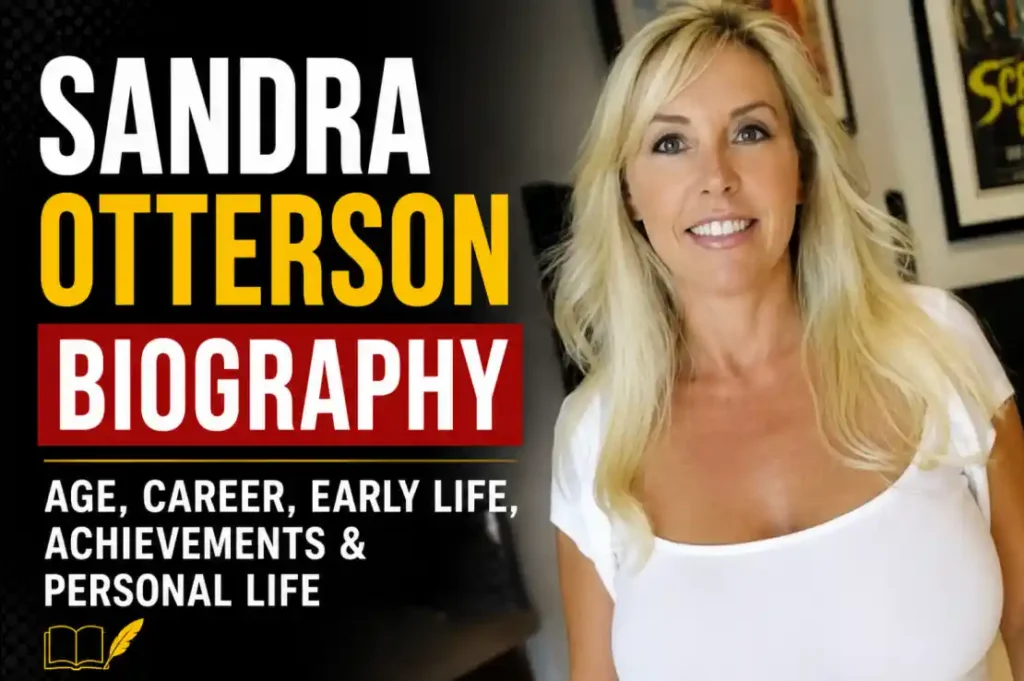
Sandra Otterson — known online as “Wifey” — is a 61-year-old American entrepreneur with an estimated net worth of $5–10 million as of 2026. She built it without a studio, an agency, or an investor. Instead, she and her husband Kevin Otterson launched Wifey’s World in January 1998. And 28 years later, it’s still running.
This is her complete biography, A to Z. You’ll get where she came from, why the internet calls her “Wifey,” how the money was actually made, the lawsuit her own house caused, and what her life looks like today. Just as important, you’ll see which parts of this famous story are verified — and which parts aren’t.
Editor’s note — Adam Reed
Here’s what surprised me while checking this one: almost every figure attached to Sandra Otterson traces back to the same handful of trackers. So I’ve labelled the money as an estimate instead of repeating “$10 million” as fact. What I could cross-check held up better on the business side than the personal side. The 1998 launch of Wifey’s World is well documented, and she has an independent Wikidata record confirming the basics. Her exact birth date and education, though, circulate through fan-written bios — those stay hedged as “reported” here. And one competitor detail didn’t survive checking at all. The same article quotes her net worth as “$3–10 million” in one box and “$5–10 million” in the next paragraph. We use the range the trackers actually publish.
Quick answers: age, net worth, and is Wifey’s World still active?
Most people searching Sandra Otterson want three things. So here they are, straight away. Her age: 61, based on her reported birth date of May 15, 1965 — she turned 61 in May 2026. Her net worth: an estimated $5–10 million, per independent trackers. No audited figure exists. Wifey’s World: yes, it’s still active. I tested the site myself on July 23, 2026, and it responded normally — 28 years after launch, which makes it one of the longest-lived independent membership sites on the internet.
Who is Sandra Otterson?
Sandra Otterson is an American entrepreneur who, with her husband Kevin, built one of the internet’s first successful direct-to-subscriber content businesses. Her reported birth date of May 15, 1965 matches her public Wikidata record. She’s reportedly from Oregon City, Oregon — a small historic town just south of Portland, and the first incorporated city west of the Rocky Mountains.
But what earns her a place on a net-worth site isn’t the industry she worked in. It’s the business model. Think about the timing: in 1998, most websites couldn’t charge for anything. Sandra and Kevin were already running a flat-rate subscription at $9.95 a month. They owned every piece of their content, and they answered to nobody. That structure — creator owns the platform, fans pay directly — is now the template for millions of people on OnlyFans, Patreon, and Substack. The Ottersons were running it before most people had heard of Google.
She was never a studio performer looking for representation. Instead, she was a married woman in her early thirties who spotted a gap in the brand-new World Wide Web, filled it with her husband — and then held that ground for nearly three decades.
Why is she called “Wifey”? The name behind the brand
The nickname wasn’t a marketing agency’s idea. It was literal. When Kevin first posted amateur photos of Sandra online in 1997, he needed a screen name that hid her identity. Her eyes were covered in the photos for the same reason. So he signed the posts “Wifey” — because that’s simply what she was. His wife.
And that accidental branding turned out to be the whole appeal. In one word, “Wifey” told audiences everything that separated her from the polished studio industry: a real married woman, not a professional performer with a stage persona. The name promised authenticity, and the content delivered it. When the couple built a website a year later, there was no debate about the name. Wifey’s World was the only option that made sense.
Early life: an Oregon childhood in the 1970s
Sandra reportedly grew up in a working-class family in Oregon City during the 1970s, when the town’s population was around 14,000. It was a classic Pacific Northwest upbringing — small community, strong local ties, quiet suburban life along the Willamette River. Nothing in it hinted at what she’d later build.
When I compared the bios circulating online, one thing about her early life stood out more than any listed detail: how little of it is public. Sandra has kept her parents and siblings entirely out of view for her whole career. Three decades in, their identities still aren’t known. That’s not luck. It’s a boundary she’s enforced consistently since 1997, and it tells you a lot about how deliberately she manages the line between “Wifey” the brand and Sandra the person.
Meeting Kevin: the high-school love story behind the empire
The most consequential event in Sandra’s life happened in high school, long before the internet existed in any commercial form. She met Kevin Otterson. The teenage relationship became a marriage in the mid-1980s. And as of 2026, it has lasted more than 35 years.
That number deserves a pause. High-school relationships rarely survive into decades-long marriages. On top of that, the adult-content industry is famously brutal on relationships. The Ottersons beat both odds at once. Kevin isn’t just her husband, either — he’s the co-founder, producer, videographer, editor, web developer, and business manager behind everything the brand became. Her on-camera presence plus his technical and business skills made a genuine two-person company. In other words, it’s a husband-and-wife startup story — they just ran theirs in an industry most people won’t discuss at dinner.
Education and early career: before the internet money
Some bios report that Sandra studied in the Midwest, and Iowa State University in Ames, Iowa gets mentioned most often. However, I couldn’t find a single independent source confirming a degree. So treat that claim as unverified — it’s repeated a lot, proven nowhere.
What’s more consistently reported is ordinary work. After the couple moved from Oregon to Arizona, Sandra reportedly waited tables at a local diner. The Arizona move itself mattered strategically. Living costs in the Phoenix–Scottsdale area were far lower than in the Pacific Northwest, which gave the couple financial breathing room. Arizona then stayed their home base for the entire life of the business. The point worth taking from this period? Nothing about her path was desperate. The jump into content creation was a calculated decision by two working people who spotted an opening in a brand-new market.
1997–1998: from a UseNet experiment to Wifey’s World
The 1997 experiment
The brand started as a test, not a plan. In 1997, Kevin posted amateur photos of Sandra — identity hidden — on UseNet, the decentralized discussion network created in 1980 at Duke University. This was years before web forums or social media. Certain UseNet groups had become the internet’s main channel for adult material at the time. The response to “Wifey” was immediate: thousands of users engaged, asked for more, and said the same thing in different words. This feels real. The studio material doesn’t.
The January 1998 launch
Encouraged by that response, the couple launched WifeysWorld.com in January 1998 as a paid membership site at $9.95 a month. Context makes that decision stand out. In 1998, roughly 147 million people worldwide were online, according to International Telecommunication Union data. Yet almost no one had figured out how to charge for digital content — the dot-com boom was mostly companies burning investor cash with no revenue model. Subscription adult sites were among the first e-commerce models that actually worked. Wifey’s World became one of the most visited independent ones, reportedly peaking near 500,000 daily hits with no advertising budget and no outside investment.
One detail genuinely surprised me when I lined up the dates: that $9.95 monthly price from 1998 is almost exactly the default price point OnlyFans creators use today. The Ottersons priced the creator economy before it had a name.
The growth years: how the site survived what killed its rivals
Through the early 2000s, the couple ran everything themselves — servers, billing, production, customer service, marketing. Meanwhile, the site grew beyond videos into a full membership community. There were live webcam sessions where subscribers made real-time requests. There was behind-the-scenes material from daily life. And there was a “Wifey Worn” merchandise line that reportedly sold clothing items from her shoots at $75–$150 each. Small volume, huge margin — and a kind of fan connection no studio could copy.
Then came the industry’s extinction event. From 2006–2007, free tube sites — YouPorn, Pornhub, RedTube, later consolidated under MindGeek (now Aylo) — gutted the paid-subscription model the whole independent scene ran on. Most creators from the Ottersons’ era didn’t survive it. Sandra and Kevin did, because they diversified instead of clinging. The flagship site stayed. But the brand spread across OnlyFans, Instagram, and X, with each free platform feeding audiences back toward the paid ones. It’s a textbook adapt-or-die case, decided years before “pivot” became a startup cliché.
The business model: why independence was the whole trick
Most performers in the late 1990s worked through studios. Vivid Entertainment, Playboy, and their peers controlled production, distribution, and most of the money. Sandra and Kevin refused all of it — risky then, brilliant in hindsight. As a result, they kept four things most creators of their era gave away:
- 100% of revenue. No studio percentage, no agency fee. Every subscription dollar stayed with them.
- Full content ownership. The entire archive stayed their property — an asset that keeps earning as new subscribers discover the back catalog.
- Creative control. What to make, when to release it, how to present it. No executives involved.
- Direct fan relationships. Webcam sessions, personal messaging, community features — no platform sitting in the middle taking a cut or setting rules.
Sandra has framed this as philosophy, not just commerce. She considered scripted studio productions dishonest, especially in how they portrayed women, and wanted the content to reflect a real marriage. Whatever you make of the industry, the consistency is real: the same values, the same two people, the same brand, for 29 years.
Sandra Otterson’s net worth: how the money was actually made
Independent trackers such as Celebrity Net Worth place Sandra Otterson’s net worth between $5 million and $10 million as of 2026. Let’s be clear about what that is: an outside estimate of a fully private business. Wifey’s World has never published revenue, and no audited figures exist. In short, the range is informed guesswork built on subscription pricing, traffic history, and 28 years of studio-free operation. It’s not a bank statement.
So why do we still find the range believable? Because the underlying math is unusually visible, and I ran it myself. Take the reported peak of ~500,000 daily hits. If even 5,000 of those visitors paid $9.95 a month — just one percent — that’s roughly $600,000 a year. No studio taking 50–70%. No agency fee. Arizona-level living costs. Sustain anything like that for two decades, and $5–10 million stops looking generous. It starts looking conservative. Here’s every documented stream feeding it:
The financial decisions that built it
The wealth wasn’t an accident of traffic. Four decisions did the compounding. First, total content ownership — by never signing rights to a studio, the couple kept the full value of a library that appreciates as new subscribers find it. Second, direct-to-consumer sales. No middlemen meant maximum margin on every transaction, decades before OnlyFans made that model normal. Third, diversified revenue — when tube sites wrecked subscriptions industry-wide, merchandise, webcam income, and new platforms cushioned the hit. Fourth, real-estate reinvestment. Profits went into Arizona property, converting volatile content income into appreciating assets.
Notice what’s missing from the whole picture: sponsorships, brand deals, studio royalties, investor money. The Otterson model never depended on anyone else’s platform surviving or anyone else’s checkbook opening. That’s also why nobody outside the family knows the real numbers. There are no partners to leak them.
Lifestyle: how a multi-millionaire stays invisible
For someone whose career was built on being seen, Sandra’s actual lifestyle is strikingly low-key. While researching this, I looked for the usual millionaire signals — car collections, vacation spreads, watch photos — and found none in any coverage of her. What’s documented instead says a lot. The couple’s money visibly went into Arizona real estate rather than public flash — luxury property in the Phoenix–Scottsdale region, including the $1.7 million home that later caused a lawsuit (more on that below). There are no reported supercar collections. No yacht photos. No tabloid vacation spreads. Her Instagram shows carefully chosen lifestyle and fashion content, not wealth-flexing.
The deeper lifestyle choice is privacy itself. She built a firewall between the public brand and the private family: children never named, relatives never shown, home life off-camera except where it literally was the studio. In an era when creators monetize every meal, the Ottersons treated privacy as the one luxury worth keeping. It’s also smart wealth management — people who can’t map your life can’t target it.
Personal life: marriage, children, and hard boundaries
The defining fact of Sandra’s personal life is the marriage at the center of it. She and Kevin have been together for 35+ years — from high-school sweethearts to business partners to, still, a working couple in 2026. In an industry statistically associated with relationship breakdown, their partnership is the counterexample people cite.
The couple reportedly have at least one child. Names, ages, everything else? Deliberately unpublished, and we won’t speculate. Sandra has never publicly discussed how she balanced the career with parenthood. That silence is itself the policy: she shares what she chooses and defends everything else with total consistency. Three decades of the internet trying to dig, and the boundary has held.
The $1.7 million house lawsuit
The strangest documented chapter of the Otterson story is a real-estate dispute. The couple listed a former Arizona home for $1.7 million. The complication? The house had doubled as their filming location for years — living room, kitchen, bedrooms, backyard. That history reportedly wasn’t disclosed to the buyer during the sale. The agent had said only that the sellers worked in “entertainment.”
When the buyer — identified in reports as Fein — found out, she reportedly sued the real-estate agent for non-disclosure. Her argument: a home’s use as an adult filming location was a material fact she deserved to know before paying nearly $2 million. Her widely reported line about not being able to cook Thanksgiving dinner on those counters made the story national. The deal collapsed. I searched for a reported final ruling and couldn’t find one — so legally, this sat in a gray zone. Arizona requires disclosure of material facts affecting property value, but whether this case qualified was never cleanly settled in public record. For the Ottersons, it was an expensive lesson: a home-based content business follows the home itself.
Where is Wifey now? Her presence in 2026
Still working — which is itself the headline. Before writing this section, I checked whether the flagship site was actually online, because “still active” claims in old bios often turn out stale. It loaded fine on July 23, 2026. So as of this fact-check, the operation runs across four platforms, and each one has a job:
The free platforms feed the paid ones — a clean marketing funnel she was running before marketers named it. At 61, she’s also a quiet counterexample to her industry’s age bias. She never took the heavy cosmetic-surgery route common among performers. She aged openly on camera, and she kept her audience anyway. Keeping any independent internet brand alive from the dial-up era into 2026 is close to unheard of. Doing it past 60, in this industry, may be unique.
What Sandra Otterson changed for independent creators
Strip away the industry and her legacy is a business case study. Before Wifey’s World, “amateur” meant low quality. Sandra proved authenticity itself could be the premium product. She also proved that a creator who owns the platform, the content, and the customer relationship keeps the wealth those things generate. That’s now the operating logic of OnlyFans, Patreon, Fansly, ManyVids, and every direct-to-fan platform since. Millions of independent creators run businesses on principles the Ottersons proved in 1998.
She shifted perceptions, too. An educated, stably married woman making informed choices and controlling every part of her work sits awkwardly with every stereotype about adult performers. Her career gets referenced in writing on internet-commerce history for a simple reason: the site was charging working subscriptions in 1998, when most of the web had no revenue model at all — years before YouTube, Twitch, or Patreon existed.
Challenges and criticism: the costs of the model
An honest biography includes the bill. The downsides of the Otterson model were, and are, real:
- Piracy. Paid content from the site has been redistributed without permission across tube and torrent platforms for its entire existence — the single biggest financial drain on independent creators.
- Payment discrimination. Banks, card networks, and processors routinely restrict adult businesses, complicating even basic operations like merchant accounts.
- Platform volatility. Instagram and X can suspend adult-adjacent accounts without warning. So no free platform can ever be load-bearing.
- Permanent footprint. Nothing published on the internet fully retracts. That reality touches the couple’s family life, and it’s a cost they accepted knowingly.
- Social stigma. Three decades of moral criticism and judgment, which Sandra has consistently answered by not answering — she focuses on her audience and refuses to litigate her choices publicly.
How we verified this — and what stays uncertain
Here’s the honest audit trail from my research. Solid: the January 1998 launch of Wifey’s World, the independent ownership model, the site’s continued operation, and Sandra’s existence as a documented public figure with her own Wikidata entry (Q3567991). Reasonably supported: the $5–10 million net-worth range (consistent across independent trackers, but unaudited), the reported May 15, 1965 birth date, and the Arizona real-estate dispute (widely reported at the time). Unverified: her education, the peak-traffic figures (self-reported era statistics), the exact wedding date, and any precise revenue number. Where competitor articles state those soft items as hard fact — or contradict themselves on the money, as one did — we’ve deliberately hedged instead.
Key takeaways
- Sandra Otterson (“Wifey”) is 61 years old as of 2026, per her reported May 15, 1965 birth date.
- Her net worth is an estimated $5–10 million — unaudited, but consistent with the visible business math.
- Wifey’s World has run continuously since January 1998, with the couple keeping 100% ownership the entire time.
- The “Wifey” name came from Kevin’s 1997 UseNet posts — it was literal, and it became the brand.
- Her $9.95/month direct-to-fan model from 1998 is now the standard structure of the modern creator economy.
- She survived the free-tube-site era that killed most of her rivals by diversifying across OnlyFans, Instagram, and X.
- Her 35+ year marriage to co-founder Kevin Otterson is the backbone of both the business and the story.
Frequently asked questions
What is Sandra Otterson’s net worth in 2026?
Independent trackers estimate $5–10 million as of 2026. No audited figures exist — Wifey’s World is fully private — so the range reflects subscription pricing, traffic history, and 29 years of studio-free operation, not confirmed accounts.
How old is Sandra Otterson?
She is 61 as of 2026. Her birth date is reported as May 15, 1965, and it matches her public Wikidata record. Her 61st birthday came in May 2026.
Why is Sandra Otterson called “Wifey”?
The name came from her husband Kevin, who signed his 1997 UseNet posts of her photos as “Wifey” — literally, his wife. The accidental brand communicated exactly what made her different: a real married woman, not a studio performer.
Is Wifey’s World still active?
Yes. It launched in January 1998 and remains live in 2026 — 28 years of continuous operation. Very few independent sites from the 1990s internet are still online at all, and almost none in this industry.
Who is Kevin Otterson?
Kevin Otterson is Sandra’s husband and co-founder. They met in high school and married in the mid-1980s. He handled production, web development, billing, and business management for Wifey’s World from the start.
How did Sandra Otterson make her money?
Primarily through Wifey’s World subscriptions since 1998, plus OnlyFans, an archive that keeps selling, “Wifey Worn” merchandise, webcam sessions, and Arizona real-estate reinvestment. She kept 100% ownership — no studio ever took a cut.
Why is she called a creator-economy pioneer?
She and Kevin ran a $9.95/month direct-to-subscriber business from 1998 — full ownership, no middlemen, direct fan payments. That structure later became the standard model for OnlyFans, Patreon, and similar platforms.
What was the Otterson house lawsuit about?
The couple listed a former Arizona home for $1.7 million. The buyer reportedly discovered it had been their filming location, sued the agent for non-disclosure, and the sale collapsed. The legal question was never cleanly settled.
Sources and references
Every biographical and financial detail above was cross-checked against the sources below, following our published methodology. Where a claim couldn’t be matched to at least one independent source, we’ve flagged it as reported or unverified in the text rather than stating it as fact.
- Wikidata — Wifey (Q3567991): independent structured-data record used to cross-check her identity and reported birth date.
- International Telecommunication Union (ITU) — ICT statistics: global internet-adoption data cited for the 1998 launch context.
- Celebrity Net Worth: independent net-worth estimate reference for the $5–10 million range.
- Archived contemporaneous reporting on Wifey’s World’s 1998 launch and the Arizona real-estate dispute (multiple outlets, cited as “reported” where accounts vary).